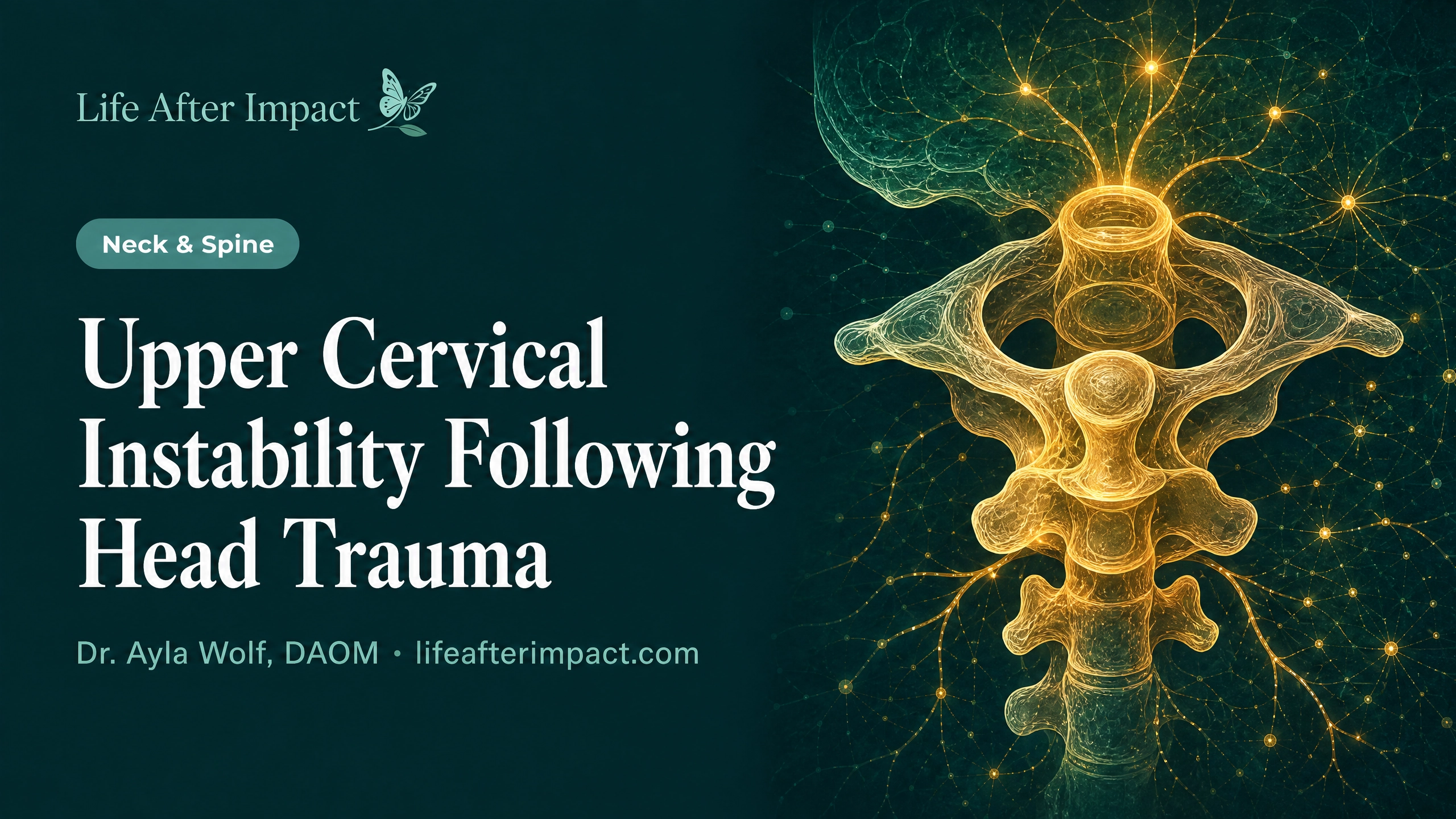
Upper cervical instability (UCI) is an underdiagnosed and often overlooked consequence of head and neck trauma. It occurs when the ligaments that stabilize the upper cervical spine — the area between the skull and the first two vertebrae (C1 and C2) — become damaged or lax. This can result in excessive movement between these vertebrae, leading to a wide range of neurological, vascular, and musculoskeletal symptoms.
In this article, I'll outline the key ligaments involved, the symptoms that can arise, and the diagnostic and treatment options available for those suffering from UCI.
The Key Ligaments of the Upper Cervical Spine
The upper cervical spine is stabilized by several critical ligaments. When these are damaged, the consequences can be far-reaching:
- Alar Ligaments: Connect the odontoid process (a bony projection on C2) to the skull. They limit rotation and lateral flexion of the head. Damage can lead to excessive rotation, causing symptoms like headaches, neck pain, and neurological issues.
- Transverse Ligament: Holds the odontoid process of C2 against the anterior arch of C1, preventing forward displacement of C1 on C2. Injury can cause atlantoaxial instability, potentially compressing the spinal cord or brainstem.
- Tectorial Membrane: A broad ligament that runs from C2 to the skull, providing stability to the craniocervical junction. Damage can lead to instability and symptoms like dizziness, headaches, and neurological deficits.
- Posterior Atlanto-Occipital Membrane: Connects the posterior arch of C1 to the occipital bone. Injury can contribute to instability and symptoms like occipital headaches and neck pain.
Symptoms of Upper Cervical Instability
UCI can manifest with a wide range of symptoms, often mimicking or overlapping with post-concussion syndrome:
Causes and Risk Factors
UCI can result from various types of trauma, including:
- Whiplash injuries from car accidents
- Sports injuries, particularly contact sports
- Falls
- Direct blows to the head or neck
- Surgical complications
Certain conditions can also predispose individuals to UCI, such as connective tissue disorders like Ehlers-Danlos Syndrome (EDS) and hypermobility spectrum disorders. In these cases, the ligaments may be inherently lax, making them more susceptible to injury.
Diagnosis
Diagnosing UCI can be challenging due to its complex and varied symptom presentation. Standard imaging techniques like X-rays and MRIs may not always reveal ligamentous injuries. More specialized tests may be needed:
- Digital Motion X-ray (DMX): Provides dynamic imaging of the cervical spine in motion, allowing for the detection of abnormal movements that may indicate ligamentous instability.
- Upright MRI: Allows for imaging in a weight-bearing position, which can reveal instabilities not visible in a standard supine MRI.
- Flexion-Extension X-rays: Assess the range of motion and stability of the cervical spine.
Treatment Options
Treatment for UCI typically involves a multidisciplinary approach:
- Conservative Management: Physical therapy, chiropractic care, and osteopathic manipulation can help stabilize the cervical spine and alleviate symptoms. Specific exercises targeting the deep cervical flexors and extensors can improve stability.
- Prolotherapy: Involves injecting a solution (often dextrose) into the affected ligaments to stimulate healing and strengthen them. It has shown promise in treating ligamentous laxity.
- Platelet-Rich Plasma (PRP) Therapy: Uses the patient's own blood components to promote healing of damaged ligaments.
- Surgical Intervention: In severe cases, surgical stabilization may be necessary. However, this is typically considered a last resort due to the risks involved.
Conclusion
Upper cervical instability is a complex condition that can significantly impact quality of life. It's often underdiagnosed due to its varied symptom presentation and the limitations of standard imaging. If you suspect you may have UCI, it's important to seek out healthcare providers who are knowledgeable about this condition and can offer a comprehensive evaluation and treatment plan.
Early diagnosis and appropriate treatment can make a significant difference in outcomes, helping to alleviate symptoms and improve overall well-being. If you're struggling with persistent symptoms following head or neck trauma, don't hesitate to seek a second opinion or consult with a specialist in upper cervical instability.