
Concussion Recovery Insights
Evidence-based articles on concussion recovery, functional neurology, and rebuilding your health after brain injury. Written by Dr. Ayla Wolf.
The Mouthguard That Lights Up After a Dangerous Hit
Can a smart mouthguard help flag a major head impact? Explore instrumented mouthguard sensors, red alerts, World Rugby, the NFL, and why clinical assessment still matters.
Ghrelin: A New Path for Concussion Treatment
Could ghrelin help the brain recover after concussion? Explore OXE-103, OXEIA Biopharmaceuticals, mitochondrial health, clinical trials, and Alex Smith’s NFL connection.
Advanced Concussion Testing: DTI, EEG, P300 and Eye Tracking
How DTI, EEG, P300, eye tracking, balance testing, and clinical examination may add context when concussion symptoms persist despite a normal MRI.
Cereset for Quieting the Mind
A thoughtful, balanced look at Cereset acoustic brainwave mirroring, brain fatigue, sleep, and what emerging research may—and may not—mean for nervous-system regulation after concussion.
Dizzy After a Concussion? Why a Comprehensive Vestibular Evaluation Matters
Dizziness after concussion can mean far more than spinning. Learn why BPPV, VOR dysfunction, visual motion sensitivity, PPPD, and a full vestibular evaluation matter for recovery.
Concussion Recovery Tips From a TBI Nurse Practitioner Who Has Been There Herself
Mandi Swanson, NP, shares hard-won lessons from her own nearly two-year recovery: why plateaus are not the end, why pacing matters, how to ask better headache questions, and why a care quarterback can make a difference.
Loss of Smell After Concussion: The Overlooked Brain Vital Sign
Loss of smell after concussion may be an overlooked neurological symptom. Explore olfactory testing, sensory baselines, smell training, repetitive head impacts, and what this sense may reveal about brain health.
The Future of Concussion Testing: Can Blood Biomarkers Tell Us What's Happening in the Brain?
Could blood biomarkers, eye tracking, imaging, and machine learning help clinicians better understand concussion recovery? A look at the research moving care beyond “your scan is normal.”
Blurry Vision, Eye Strain and Dizziness After Concussion: When 20/20 Vision Isn't the Whole Story
A normal eye chart does not assess every part of visual function. Explore why blurry vision, eye strain, dizziness, light sensitivity, and visual motion sensitivity may persist after concussion.
Hyperbaric Oxygen Therapy for Concussion: What Does the Science Actually Say?
A deeper look at HBOT, pressure, oxygen, neuroinflammation, and the research still needed to understand its role in concussion and traumatic brain injury recovery.

The Hidden Habits That Can Help—or Sabotage—Concussion Recovery
Recovery does not stop when an appointment ends. Dr. Ayla Wolf shares practical lifestyle edits—from reducing decision fatigue to creating true rest—that can make daily life easier for a healing brain.
EMDR: Adapting Trauma Therapy for the Injured Brain
Many people recovering from concussion are also processing trauma — from the accident itself, months of suffering, or being dismissed by providers. Dr. Michelle Morrissey explains how EMDR is adapted for brain injuries and why reducing the burden of trauma may be a missing piece in long-term recovery.
Could Your Earliest Relationships Be Influencing Your Concussion Recovery?
Attachment theory isn't just about relationships — it's about how the nervous system learned to survive. Dr. Ayla Wolf and Dr. Matthew Tolstoy explore how early childhood attachment patterns may shape autonomic regulation, dysautonomia, and concussion recovery.
Is Your Brain Healing… or Just Compensating?
If you’re functioning after a concussion — going to work, taking care of your family, getting through the day — does that mean your brain is healing? Not necessarily. Dr. Ayla Wolf and neuro-occupational therapist Nate Pope explore the difference between compensation and true recovery.
Fueling the Healing Brain: Why Energy Metabolism and Sleep Matter After Concussion
After a concussion, the brain faces a neurometabolic crisis — energy demand rises at the exact moment production becomes less efficient. Dr. Ayla Wolf explores CereFlex AM/PM, a two-part nutritional protocol designed by a chiropractic neurologist and brain injury survivor.
The Hidden Link Between Eye Pain, Poor Sleep, and Brain Fog After Concussion
Could restrictions in the muscles and bones surrounding the eyes interfere with restorative REM sleep? Dr. Ayla Wolf and physical therapist Cynthia Stein explore the Nasal Release Technique, eye movement, and why you wake up exhausted after concussion.
Breathe Better, Heal Better: Why Breathwork May Be One of the Most Powerful Tools in Concussion Recovery
Breathing is regulated by the brain — and after a concussion, it can become dysregulated without you realizing it. Dr. Ayla Wolf and Dr. Jonathan Chung explore how breathwork, resonance frequency breathing, and HRV biofeedback can support autonomic recovery.
Ibogaine and Brain Injury: Could This Plant Medicine Change the Future of PTSD, Depression, and Concussion Recovery?
Ibogaine is gaining serious scientific attention for its potential role in treating PTSD, depression, addiction, and traumatic brain injury. Dr. Ayla Wolf explores the emerging research and the story of Navy veteran Lorna Sturchio.
Why Calming the Nervous System May Be One of the Most Important Steps in Concussion Recovery
What if part of concussion recovery isn't just healing the brain — but helping the nervous system remember how to relax again? Dr. Ayla Wolf explores BrainTap, nervous system regulation, and why sleep may be the most underrated piece of the recovery puzzle.
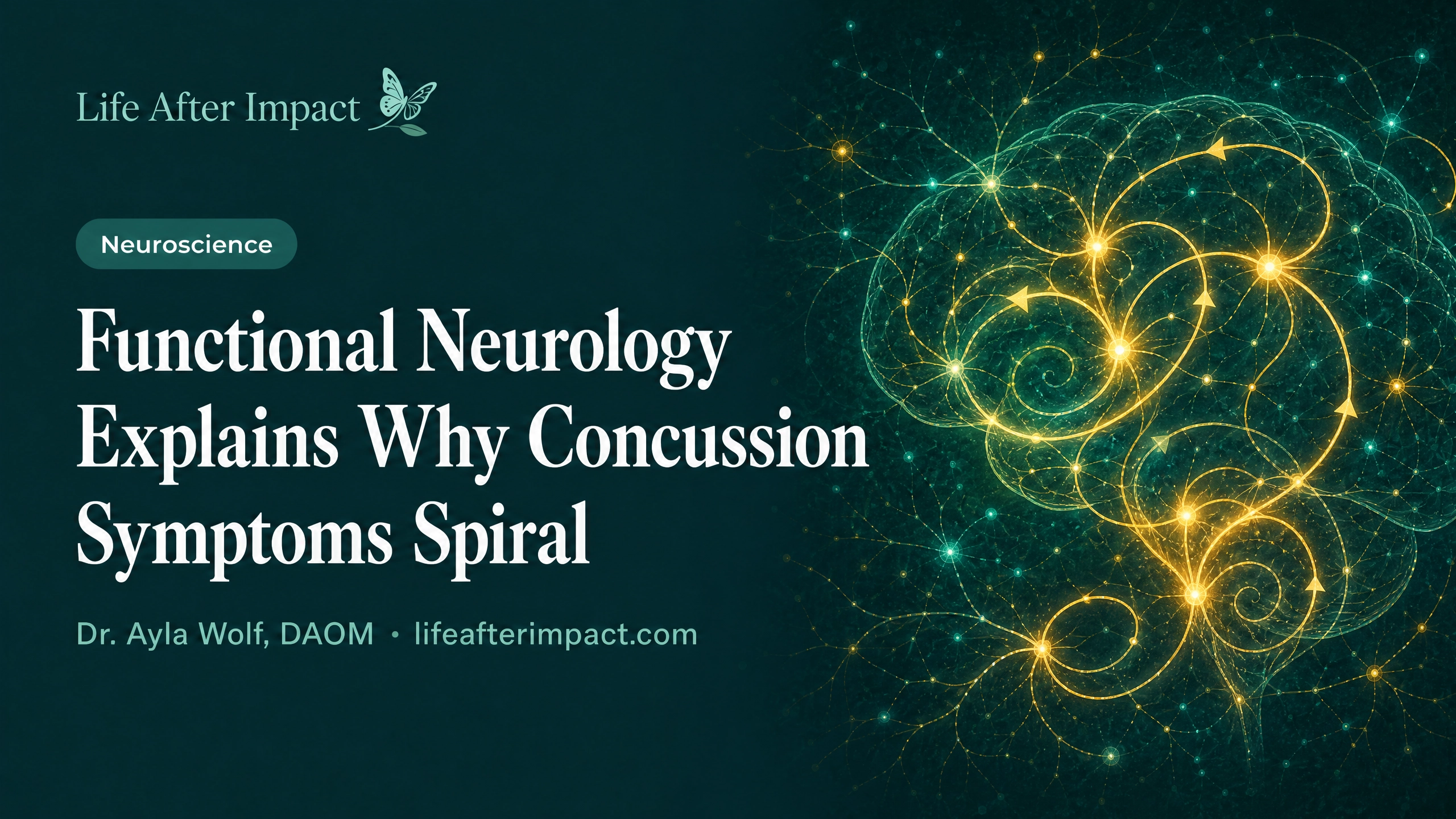
Functional Neurology Explains Why Concussion Symptoms Spiral
Your CT scan is normal. Your MRI is normal. So why do you still feel broken? Dr. Matt Antonucci's NERD model explains how maladaptive feedback loops keep concussion symptoms alive — and what recovery actually requires.
Hormonal Disruption Post-Concussion
The hypothalamus and pituitary gland are vulnerable to concussion injury — and when they're disrupted, hormonal chaos follows. Dr. Ayla Wolf explains the connection between brain injuries, pituitary changes, and hormonal health, especially in women.
Hearing Loss, Tinnitus & Hyperacusis: Why Treating Your Hearing Could Protect Your Brain
Treating hearing loss is the #1 modifiable risk factor for reducing dementia risk — ahead of diet, exercise, and supplements. Yet fewer than 10% of people with measurable hearing loss are doing anything about it.
Considering a Red Light Therapy Device in Concussion Recovery? Read This First
Not all photobiomodulation devices are created equal — especially for brain health. Here are 7 essential things to consider before purchasing a PBM device for at-home use in concussion recovery.
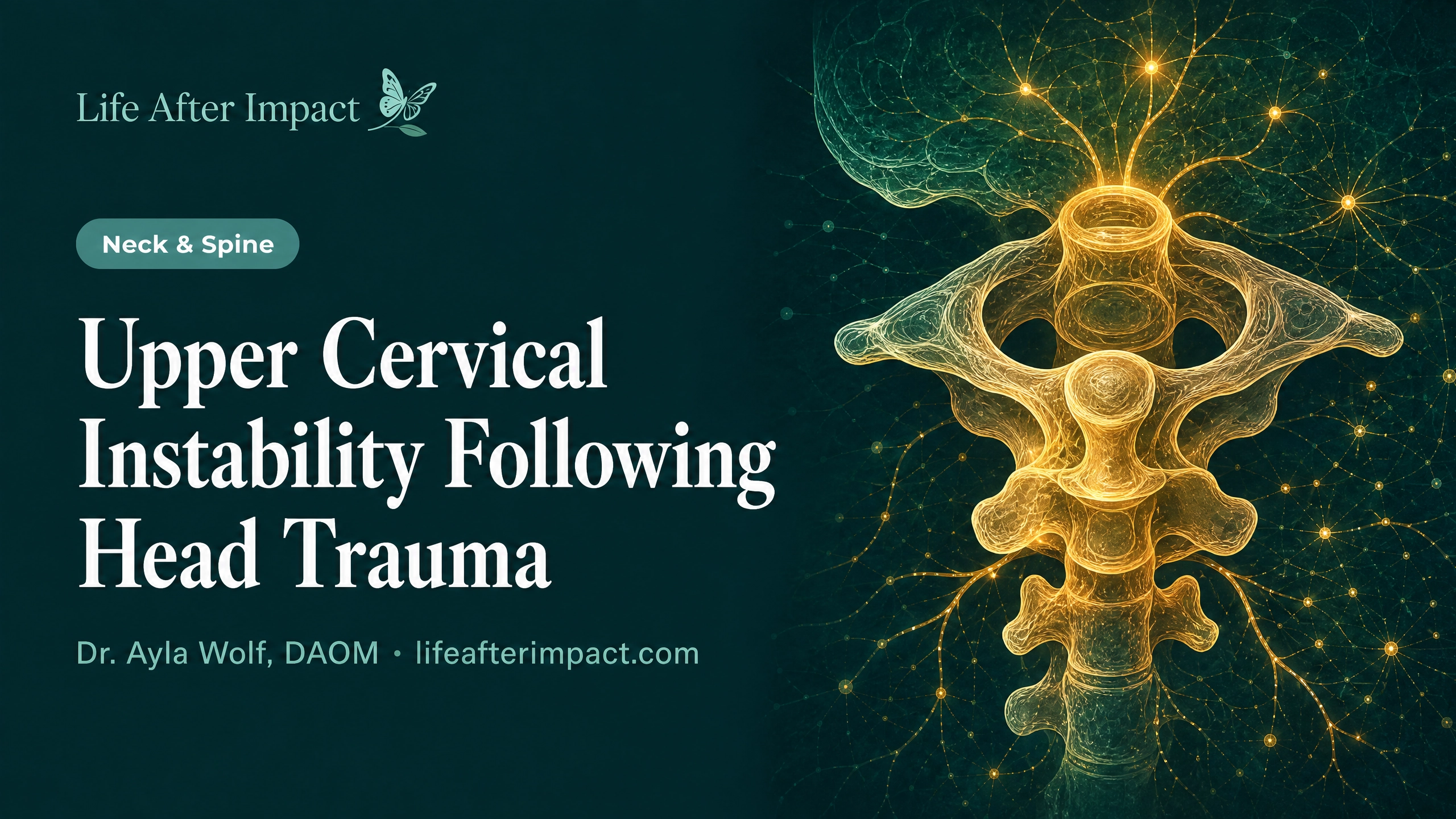
Upper Cervical Instability Following Head Trauma
In a small but significant percentage of concussion cases, ligament damage in the upper cervical spine causes debilitating neurological symptoms — and goes undiagnosed for years. Here's what to look for and how it's treated.
Is Pain Medication Making Your Head Pain Worse?
An estimated 50% of people with chronic headaches are actually experiencing medication overuse headaches. Even over-the-counter drugs like Aleve and Ibuprofen can turn a manageable problem into a daily one.
Lost in Translation: Understanding Vestibular Symptoms Beyond Vertigo
Most people think vestibular symptoms mean spinning vertigo. But rocking, swaying, floating, and feeling like you're walking on pillows are all vestibular symptoms too — and they have a specific neurological explanation.