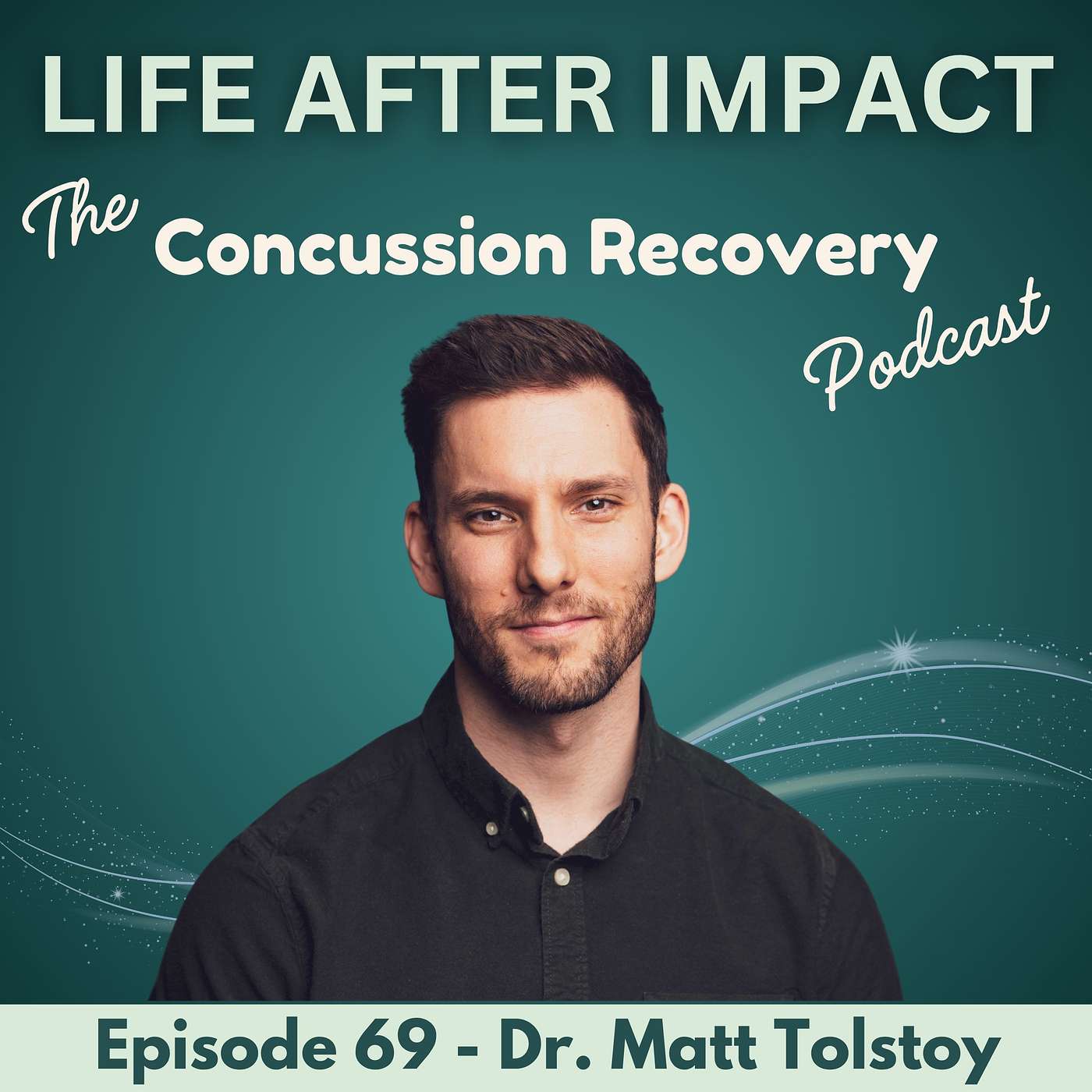
How Early Attachment Shapes Dysautonomia And Stress Responses with Dr. Matthew Tolstoy (Part 1) | E69
About This Episode
Can early childhood experiences influence concussion recovery, dysautonomia, anxiety, and the autonomic nervous system?
In this episode of Life After Impact, Dr. Ayla Wolf sits down with integrative therapist Dr. Matthew Tolstoy to explore the fascinating connection between attachment theory, autonomic regulation, post-concussion syndrome, and brain injury recovery.
They examine how our earliest relationships help shape the brain's unconscious "survival programs"—patterns that influence how we respond to stress, danger, connection, and safety throughout our lives. While these attachment patterns often operate quietly in the background, a concussion can disrupt the brain networks that normally help regulate emotional and autonomic responses, making these deeply ingrained patterns much more apparent.
Dr. Tolstoy explains why attachment theory is about far more than romantic relationships. At its core, it is a neurobiological model of survival. From infancy, our nervous system is constantly learning whether the world feels safe, whether other people can be trusted, and how to respond when we experience threat. Those early experiences become deeply embedded within the autonomic nervous system and continue influencing physiology long into adulthood.
Together, we explore the four major attachment styles—secure, anxious, avoidant, and disorganized—and discuss how each one may shape autonomic regulation, stress responses, emotional resilience, and even the way patients experience dysautonomia after concussion.
In this episode, you'll learn:
- What attachment theory really is—and why it extends far beyond relationships
- How early childhood experiences shape the autonomic nervous system
- The neurobiology connecting attachment, stress, and survival
- The four attachment styles and their characteristic physiological patterns
- Why two people with similar concussions can have very different autonomic responses
- The connection between attachment patterns and dysautonomia
- How concussion can uncover subconscious nervous system patterns that previously went unnoticed
- Why psychology and physiology cannot be separated when treating persistent concussion symptoms
- The importance of interdisciplinary care between rehabilitation specialists and mental health professionals
- How awareness creates an opportunity to reshape long-standing autonomic patterns through neuroplasticity
Perhaps the most empowering message from this conversation is that attachment styles are not life sentences. They are learned patterns of nervous system regulation that developed to help us survive. As Dr. Tolstoy explains, awareness becomes the bridge between unconscious autonomic responses and intentional healing. When we begin to understand why our nervous system reacts the way it does, we also begin creating the possibility for change.
Whether you're recovering from a concussion, living with dysautonomia, working with patients who have persistent post-concussion symptoms, or simply fascinated by the intersection of neuroscience, psychology, and autonomic regulation, this episode offers a powerful new perspective on what it truly means to heal.
Work with Dr. Matt Tolstoy: website
Dr. Tolstoy on instagram: @matttolstoy