
Back to Podcast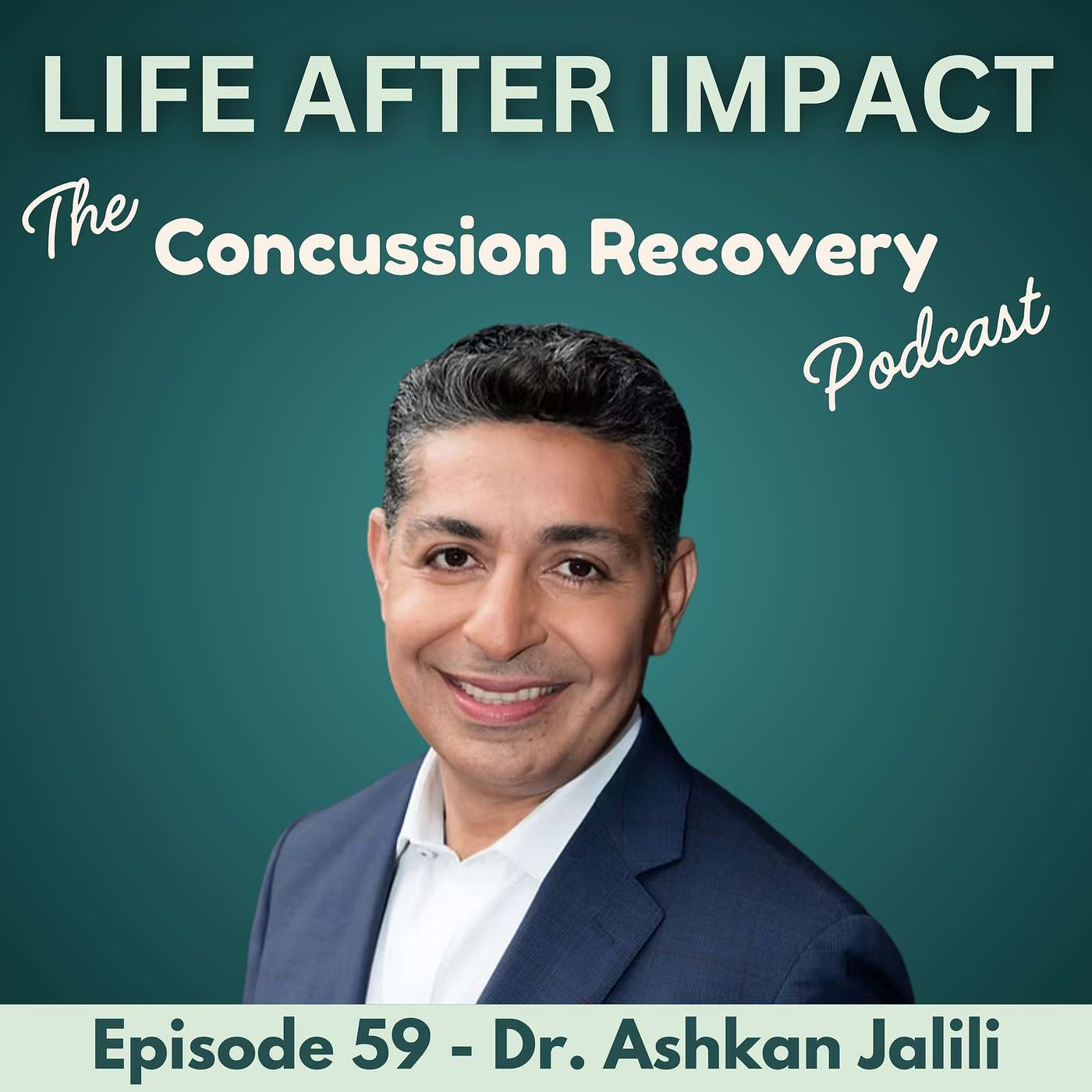
The Right Kind of Fuel for Daytime Energy and Masterful Sleep with Dr. Ashkan Jalili | E59
May 18, 20261h 2m
NutritionCognitive FunctionSleep Disruption
About This Episode
Dr. Ashkan Jalili spent over 11 years developing CereFlex AMPM — a supplement system designed to optimize brain glucose regulation, neurotransmitter function, and sleep quality. In this episode, Dr. Ayla Wolf sits down with Dr. Jalili to explore the metabolic side of concussion recovery and why fueling your brain the right way can make all the difference.
Dr. Jalili shares his own remarkable story of TBI recovery, his journey through chiropractic neurology and functional medicine, and the science behind his approach to brain energy and sleep optimization. This is a conversation about the intersection of nutrition, neuroscience, and healing.
Topics Covered
NutritionCognitive FunctionSleep Disruption
Full Transcript
Dr. Ashkan Jalili: 00:00
The idea of this whole thing was at the end of the day was how you can improve and regulate the glucose in the brain for the neurotransmitters to do their job properly.
Dr. Ayla Wolf: 00:13
Welcome to Life After Impact, the concussion recovery podcast. I'm Dr. Ayla Wolf, and I'll be hosting today's episode where we help you navigate the often confusing, frustrating, and overwhelming journey of concussion and brain injury recovery. This podcast is your go-to resource for actionable information. Whether you're dealing with a recent concussion, struggling with post-concussion syndrome, or just feeling stuck in your healing process, know that you are not alone. This podcast can be your guide and partner in recovery, helping you build a better life after impact. Dr. Ashkond Jalili, welcome to Life After Impact.
Dr. Ashkan Jalili: 00:53
Thank you for having me. Really appreciate it.
Dr. Ayla Wolf: 00:56
Yes, I'm so excited to learn more about this product that you have spent over 11 years developing called Seraflex AMPM. And I would love to just have you maybe introduce yourself and your background, uh, the work that you do, and what led you to spending that much time really doing a deep dive into creating this product.
Dr. Ashkan Jalili: 01:20
For sure. Thank you for the opportunity. I really appreciate it. By the way, it's a great, great program you have created. So I really congratulate you. Bring in really good speakers, fantastic humans that I've seen in my life before. So thank you for it's been so much fun.
Dr. Ayla Wolf: 01:38
Yes. Well, we've been trying to make this happen for several months now.
Dr. Ashkan Jalili: 01:42
So I know, I know. It's been it's been crazy. But thank you for your patience. Well, um the the whole thing started about 30 years ago, to be exact, when I uh was hit by a pit as a pedestrian by a car in Toronto, Ontario, Canada. And so that kind of put a damper on my goals of becoming a professional soccer player and going to medical school. So I lost my soccer scholarship to a very good university in the US. And as a result of that, I sustained a brain injury, which was pretty much, I would say, undiagnosed for a long period of time because I had a few fractures here and there. So back then, 30 years ago, really the medicine wasn't looking at concussions.
Dr. Ashkan Jalili: 02:26
If you had bleeding in the in the brain, then therefore you had a brain injury. If you didn't have bleeding, therefore it was all okay. And so for a couple of years, I was just basically lost in the world, not knowing exactly who I am, where I was, dealing with a lot of symptoms, you know, mental health issues, and I didn't know why, because by default, I was a soccer player. That was my identity, and I always fought for you know, for 90 minutes, I would not surrender in the field. But then suddenly I was just put in a chair or in a bed. I was like, Yeah, you can't really play this thing. Uh, and this is your new you. So accept it. Um, luckily, with well, not luckily, well, some things happened afterwards with the brain fog, with dizziness every single day, a few seizural activities that I had, but fainting on a daily basis that was really dragging me down. And I didn't know where to go, who to see. I was seeing a physio for every day pretty much, five days a week for uh for, I don't know, about a year, year and a half. I was seeing a physio, which they basically the only thing they would do is just you know strengthen the muscles, get rid of the whiplash and you know, the pain, the lumbar fracture, and then the fibul uh fibular head fracture, just trying to, I guess, rehab me. But nobody looked into my brain because you know I thought, by the way, I was a newcomer to um to Canada. So I came from Iran and Spain and then Canada. So I was learning English. Well, I learned English for four years before this injury happened. So I kind of lost my command of English, and I didn't know why, because I was trying my best to speak the language, but it nothing was coming out properly. So that's when I thought that something is wrong with my system. I'm feeling better with my body, my musculature, and everything else, but I am not really doing well. I don't know where I am, I don't know who I am, uh, a little bit moodier than usual, you know. Um, and so I was living by myself at the time, no parents. They were back home in Iran, so I didn't even tell them that I had this issue because they couldn't do anything. But so I kind of dragged it uh a little bit. And my wife, current wife, who was my girlfriend at the time, she saw like how I was transforming uh from a nice guy to somewhat kind of silent dude, and um, so it was worrisome. I saw I was referred to a chiropractor when I started use I started going to McMaster University in uh in Ontario. My soccer coach, whom I love dearly because he really changed my life, he said, Look, you can't play soccer. They told you not to play anymore because you probably something is in you wrong in your brain because you had a seizure and they don't know where it's coming from. So you also have multiple disc herniations in your lombard spine, so they're not gonna let you play. But why don't you go see this chiropractor in next to the university, and maybe he can just fix your back and neck or something like that, so you don't keep complaining about your neck pain and back pain. So I went to this guy, didn't believe it, because I didn't really know what chiropractors do, to be honest with you. Medical model person that I was, my dad was a doctor, my mom was a nurse. So I really didn't know what chiropractic is. But this guy kind of changed my life in three and a half weeks, to be exact. And after two years, I thought, wait a second, what did he exactly do to give me my life back? And eventually, you know, as I started feeling better and better, I said, I asked him, I said, look, Dr. Thuro, you um, do you think I can ever go back to play soccer again? Because that was my identity. I mean, I just couldn't bear the fact that I would never be able to play again. Um, and he said, Well, knowing that you almost um committed suicide a few months ago, well, that's one way to go. Let me give you another way. How about if you're playing soccer, you're playing the Ontario Finals of the Ontario games, university games, and your coach says, Hey, Ash, I want you to come to the field for 10 minutes. You go in, they're gonna cross the ball over, you're gonna head the ball, you're gonna score, and let's see what happens. You go in, you head the ball, you score the goal, your team wins, you die. Pick. And I'm like, are we winning? It's like, yes, good, I pick that. So at the end, I figured that what he said essentially is like, if you have a passion and you can't live through your passion, you're a dead person to begin with. So might as well die standing. And I took that to the heart and I said, So, how long would it take for me to come back? And he said, Well, you know, you haven't been doing anything for six months. This is a really high category football they're gonna be playing in the university as varsity. So look, give yourself about six months to a year. And I pushed through it, and four and a half months I came back and I tried out for the team, and the coach said, Hell yeah, come on over. So I got back in.
Dr. Ayla Wolf: 07:47
Wow. Wow. Can I can I back up a few steps here? Because you you said you were fainting almost every day. Yeah. Did the chiropractic alone stop that?
Dr. Ashkan Jalili: 07:58
Yes. So I tell you what the diagnosis was, now that I know. It was cervicogenic vasovagal syncope.
Dr. Ayla Wolf: 08:07
Okay.
Dr. Ashkan Jalili: 08:08
So, and it was apparently it's pretty common in our industry, you know. I see it a lot. I mean, not all the time, but you know, once a month, I always have someone with that kind of stuff, some little
Dr. Ashkan Jalili: 08:20
dysautonomia, uh aggravated by cervical spine, people post-wiplash. So, yeah, that's basically what it was. But I didn't know, no, but the cardiologists didn't know it, then the neurologist didn't know it. And it's like, okay, you know what, just keep increasing the dose of your tigratol or dilantin, seizure medications. Maybe that's the case. Um, and I basically I was doing that for a year and a half, almost two years, until this guy changed everything. And I the the day that I didn't get a headache when I woke up, I thought I died because it was kind of unknown to me for two years not to to wake up without a headache. It was just not there. I mean, it was always present. But the day that I woke up and there was no headache after an upper cervical adjustment, I uh I got really anxious. I thought I died. I was like, oh shit, I have very that was it? This is it? I barely did anything in my life, you know. Yeah, it was it was incredible.
Dr. Ayla Wolf: 09:21
So waking up with no pain, and your first thought is I must be dead.
Dr. Ashkan Jalili: 09:25
Yeah, yes, that's how I was. I was pretty much conditioned to wake up with pain, and that's why I didn't want to get up, and that's why I was depressed because I thought, ah, I have to deal with this again, and how am I gonna deal with it? I just have to hide it, I have to put a different face on and go in, go to the classes, try to absorb as much as I can. It would take me six hours studying one paragraph to understand some something in biology 101 in university. It was it was really uh it was really draining. Nevertheless, I decided to push through it, and I thought what I went through is phenomenal. I better use it. And so I asked Dr. Thurlow, the chiropractor's like, look, I really want to do what you do. What should I go through? What am I supposed to do? Where do I go? What kind of universities are there? So he kind of introduced me to a few things, and eventually I did my two years of undergrad, and then um there was there were a couple of universities in California that I thought, okay, you know what? I speak Farsi because I'm Persian. I was born in Iran, I speak Farsi, I grew up in Spain, so I speak Spanish and a little bit of English. So what would be the best market? California, Los Angeles. So I covered all of it, and so I did the three years program at Cleveland Chiropractic College, and I became a chiropractor. However, it was for me to know what else I can do to help myself. And so I went through chiropractic school, I got to meet Dr. Carrick, and from there on it was a whole different story. It was Dr. Carrick and then Dr. Late Dr. John D'Anofrio, who he was uh he was an instructor for Irene Gold and Associates, they would teach the board review classes, so you can actually do all your you know uh national boards, so you can pass. He would just learn extra. And when I met Dr. D'Anofrio, who was at the time, we're talking about 24 years ago, by the way, um, he was the president of American Chiropact Board of Neurology. And so he told me, you need to come and do this neurocourses with Dr. Carrick and um Carrick Institute. I said, All right, but the way you speak it, I can't understand because you speak neurology and I'm still like a student. Uh you will learn it, and when you learn it, you'll know what are your shortcomings. And when you know your shortcomings, you'll be able to know how to fix them. And when you fix them, you will laugh all the time. That's how he was. And then I was like, All right, I'm game. So before I took my board part four, the last month of my graduation, before I graduated, he said, Look, I'm gonna hire you to teach for me because you're really good at what you do. I was like, Dr. D'Onofrio, I don't do anything, I only study to pass the boards. Like, you don't know anything about yourself, my friend. So, okay, fine, no problem. So I started working with him after I graduated, and that's how I got into the neurology of life, and it has been an incredible journey.
Dr. Ayla Wolf: 12:50
So he saw something in you, and he was right.
Dr. Ashkan Jalili: 12:53
So he found he saw it better than I did. I had always because I didn't trust my brain that much, I love. I just did not, to be honest with you. Um, he made me, he forced me to see myself from a different perspective, different angle, and then use my little tiny potentials to expand my horizon. And you know, I forever am grateful to him for opening my eyes and putting me in the path of neurology with Dr. Carrick. Because when I saw him and I thought, oh my God, this is a completely different planet. Completely different planet. And this is going to be great because everything Dr. Carrick was talking about in one of his sessions for students, I'm thinking, wow, he's
Dr. Ashkan Jalili: 13:40
describing me as a patient, and I have all these things, and he's talking about PMRF, and he's talking about the frontal lobe and a parietal lobe and cerebellum. Like, oh my God, if I can have access to all those areas he's talking about, I'm gonna be a superman. I'm gonna go back to my previous life probably better than before. And that's so I pursued this since 2000 yeah, 2003, 2004. I started pursuing chiropractic neurology. Uh, I was in LA at the time in Santa Monica, and I started integrating everything that I could learn to to improve my my own brain, my nervous system, until I came to a point where I thought, all right, this is it. It won't get any faster, any better than this. So there's something missing. There still was something missing metabolically, very off. It's like, okay, you know what? I don't get it. I'm doing everything that Dr. Carrick says, Dr. Shadgrove says, Dr. Glen Zelensky. All these guys were my professors, my teachers, and I was learning from the best. I'm like, you know, but something is not fitting properly, and I'm still feeling a little foggy. Some once in a while, when I played soccer and I hit the ball, stupid, um, I would get a little dizzy. The day after I would be a little slower in my speed of reaction, but I would recover. But it was ongoing, so I thought this cannot be. And then I spoke to a neurologist friend. I said, What do you think? If I need any uh medication for this thing, he's like, you know, I mean, I would just send you, give you back your seizure medications because you never know if you're gonna have another seizure because you already have a history of it. I was like, I haven't had a seizure in like four or five years. Why would I want to go on a medication that was making me dumb? Uh, pretty much. And I was like, well, I don't even know. Maybe you should eat um uh more fat and more protein. It's like, and then I started digging in, and this is right around Google time that you've stuck internet a lot, right? I'm talking pretty historically. So I started looking at things, and I was like, oh, ketogenic diet was designed for people with um with seizure. So what happens if I do that? And I started thinking a little bit, I was like, oh, this is too tough for me. I I like my mocha on a daily basis, you know, and that kind of stuff. I didn't know anything about nutrition at the time. And then so that prompted me to take um to go back to school and study functional medicine with A4M and then Institute of Functional Medicine. So I went back, did all the 15 modules to learn metabolism, to see what is metabolic capacity that we all talk about in neurology. What is that metabolic capacity? Is it just glucose and oxygen? No, it's a lot more than that. So from there on, I got tickled to take on this new project and create some supplements that is gonna help me instead of taking 18, 19 supplements a day that they gave me, I would take four and it would do the trick.
Dr. Ayla Wolf: 17:02
And so I embarked in in your process of studying functional medicine, you started to take different supplements, and then before you knew it, you kind of had a cupboard full of them.
Dr. Ashkan Jalili: 17:12
Totally, 100%. And it was disgusting to take 19 supplements a day. It made no sense. You know, there were times that I would feel like, okay, you know what? I'm doing blood tests, I'm doing urine analysis, and I don't see much of a difference in neither the markers of those nor in the way I feel. So, you know, and as a man, I tell you, we're not really in tune with our bodies at all. For much that we love to accept, oh, we're good. I know, under no, we don't. It's guaranteed we don't understand our bodies that well. So, but I was looking for that spark, it's like change, but I just didn't see it. And I started kind of playing around with a little bit of um, and I started studying more the concussion and the brain injury of my because of my own issues. And the more I dug in, the more I found out that concussion is actually a metabolic dysfunction. And then eventually we started noticing that, yeah, there's a metabolic cascade that happens during a concussion within the first few seconds where the glucose, you have hyperglucosyl, um you have hot more glucose, and then you have down regulation of glucose, and then everything just goes in disarray. And the more I started looking into it, and I thought, all right, great, so I probably need more ginkgo beloba, I probably need more PKQ, or maybe I need this. And I started playing with this, like, wait a second,
Dr. Ashkan Jalili: 18:41
this makes no sense. If we're taking all these things to improve the brain synapses, whatever the BDNFs are, or the neotropics and things of that sort, if your brain doesn't have the proper the proper fuel delivery system, then you're really making very expensive urine because you're not absorbing anything in the system because you don't have the capacity to regulate the cells because there's not enough glucose there. And that's why a lot of people get hypoglycemia and eventually get a lot of craving for carbs, and then they get into this cascade of depression and they don't do well, and so it's like, oh, that's me. Oh my God. So I started playing around with the fuel delivery system based on autonomic nervous system loss. And the moment I started combining few things like um, you know, chromium and then um gimnema silvestre, and then a little bit of um, you know, different factors, I started playing around with it, and I had one of my very good friends who's who was a pharmacist, I say, Hey, I want you to do this and this and this, and this amount and this amount, as I was studying functional medicine. And so I started doing that isolated just for glucose, and I noticed a little bit of a change. Then I added alpha lipoic acid, and I was like, oh, well, this is actually better. I can see that I'm not crashing so fast during the day, and I'm only instead of three espresso, I need one. So I'm thinking, oh, this is we are onto something here. And then I started studying more and more, and I combined a few things, and then that's when I realized that we are different people. We in the morning, and then we're very different at night. So our metabolism is very different, and that's when it prompted me to create two separate components, one of them being the AM formula, uh, which is more of a performance phase, that it upregulates the system, it gives you, prevents you from crashes, allows you to utilize your glucose um a lot more efficiently by pushing more ketogenesis into your system. And then the night one is more of a recovery phase where you're gonna have more serotonergic pathways kicking
Dr. Ashkan Jalili: 21:11
in, you have more acetylcholine for for memory, which is more a vagus nerve tone tonifier or neurotransmitter, and then more gabiogergic stuff. So then that system would allow you to kind of wind down gently at night, so then you can have the capacity to secrete your own melatonin without relying on exogenous melatonin. And that was a game changer for me. And so, yeah, that's how it we got here.
Dr. Ayla Wolf: 21:44
Yeah, yeah. And you know, your your formula is very interesting because you definitely, like you mentioned, have support for the acetylcholine neurotransmitter. You've got support for the dopamine, you've got support for serotonin, you just mentioned GABA. So it's almost like all of These ingredients are also supporting all of these neurotransmitters that our brain needs in order to function and to be alert in the morning and relaxed at night.
Dr. Ashkan Jalili: 22:09
Totally. Yes. It took, as you said, 11 years and a little bit to really bring it to light. And I tried it and I was a guinea pick myself, because obviously you can't have other people do it. But it worked out beautifully. And I uh and during the time, one of my very good patients who was taking lots of formulas uh for her concussion, um, she asked me, It's like, look, you have prescribed a lot of the supplements for me. And I was getting it from Apex Energetics and AOR and uh standard process at the time. I combined a few things for my patients here in Vancouver because I had the formula. I created the formula, but I was sitting on it. I was like, you know what? I don't have time. And to be honest with you, and the resources to bring this to the market, it takes so much. And I just want to treat patients. I love treating patients. I love what I do, and I think I do a pretty good, decent job with patients. Like, yeah, I don't want to get into you know nutrition. I know a lot about it. I can recommend patients, and there are amazing natural paths that I work with here in Vancouver. Uh, then I let them be the people with functional medicine background that they can do the better job than me. I always say it. And so, and this patient said, You have a formula, what kind of formula is it? I said, Well, it is a formula that worked for me when I was taking this stuff when I made it. But to be honest with you, it's it's all of these things you're taking, but in a very specific dosage for patients with brain injuries and post-concussive syndrome. And then eventually I tested them on people, family with cognitive decline. I was like, oh, this is actually pretty good. They'll feel sharper, everybody's sleeping better at night, and I started sleeping better at night. And I thought, okay, you know what? Maybe I should tell people. And I started talking to a lot of people, and this patient of mine is like, listen, you need to bring this to the market. I'm gonna partner up with you. The formula is yours, I'm gonna put basically all the logistics are mine. I'm gonna do it. You don't have to worry about it, you just practice, and then once a week we're gonna meet and see what we're gonna do. So we partnered up and we brought in um uh one of the biggest pharmacies, uh pharmacists and a pharmacy chain and health, well, wellness pharmacies in Canada called Pure Pharmacies. Um, and the owner is a good friend. I was like, you know what? I love this formula. This is great, this is gonna help a lot of people. I will partner up with you guys. So the three of us, the pretty much the formulation is mine, they're doing all the logistics. We got the Health Canada approval, and last year we got the FDA um approval to market. So everything is great, and uh, I sourced all the ingredients here in Canada. So just in case, God forbid we have another pandemic, we don't have to wait for shipments from elsewhere.
Dr. Ayla Wolf: 25:16
So even the the ginsengs, you're getting that.
Dr. Ashkan Jalili: 25:20
All of it, all of it is from here.
Dr. Ayla Wolf: 25:22
Wow.
Dr. Ashkan Jalili: 25:23
So we have very local, great farms here in in Vancouver and British Columbia area. Uh, so we source a lot of it. And that's one of the reasons. You know, it's I know that I can rely on the quality assurance, I can rely on the fact that we know the vendors. Um, and the pharmacy, the pure pharmacy, are very, very um, I would say, meticulous about a lot of the things that they their ingredients that they get. So they're doing a great job. And so, yeah, that was one of the biggest problems that I didn't want to source it out there. I said, I'm not gonna produce a thing that you know, ingredients come from all over the world. And no, I want it to be here, North American style. If something happens, I want to make sure that we have access to it so people can take it. And that's uh that was like we about a year and a half of discussion until we approved this whole thing.
Dr. Ayla Wolf: 26:14
Uh-huh. Yeah. Wow, that's amazing. And you have Sage in your formula, which is not something that you see in, I don't mean almost any other concussion formula that I've ever seen on the market. I think maybe it's something that you see more so in Europe. And I know that it helps with the preventing the breakdown of acetylcholine in the brain. Is that one of the reasons why you chose it?
Dr. Ashkan Jalili: 26:37
Perfectly stated. It's also a tonifier of the neurotransmitter. So uh I was going through some of the classes with um Dr. Gordon, um, who had one of the one of the first traumatic brain injury
Dr. Ashkan Jalili: 26:54
concussion classes in the A4M courses. He was talking about Sage because of the European studies that they have done and some of these things. And I kind of like was jotting down notes. And so when I would go back to the hotel or in the plane coming back home, I would go over to my notes and like Sage. I remember those this that was a detoxifier for you know to get rid of uh bad juju or things like that. That's right. All right.
Dr. Ayla Wolf: 27:28
Are we lighting your pills on fire and smoking them?
Dr. Ashkan Jalili: 27:32
And if there's pure darkness, you can always set it on fire, have some light. No, that's true. That it prevents the um, it's one of the um breakdown inhibitors for acylcholine. So you can actually maintain the acylcholine in your system for a little longer time. So you we realize that a lot of people are acidic in nature, you know, distress, lack of sleep, and so on and so forth. So if you take take a supplement, the longer you have it in your system to be acted upon and reacted upon, the better it is. So sage is one of those, one of those ingredients that actually streamlines the neurotransmitters and helps the tonification and so on and so forth.
Dr. Ayla Wolf: 28:14
Right. So you have you have the sage and then you have the hooperzyne A, which is also an acetylcholinesterase inhibitor, so helps to prevent the breakdown of acetylcholine. Then you have the alpha GPC and the choline to actually give the building blocks to produce acetylcholine. So you have all kinds of amazing ingredients that work synergistically to support that particular neurotransmitter, but then you also have amino acids and the rhodiola, which support the dopamine. And so I think it's so cool how you've taken different ingredients that all support the neurotransmitters that the brain needs in order for people to feel balanced and be able to modulate better.
Dr. Ashkan Jalili: 28:55
100%. Thank you for bringing that up. The idea of this whole thing was at the end of the day was how you can improve and regulate the glucose in the brain for the neurotransmitters to do their job properly. Because, you know, I've taken a lot of these things in ice in isolation, you know, by themselves without any kind of tonifiers or without any kind of chaperone of any sort. Um, I was an adaptogens for a while. It's like, yeah, great. I still needed my three espresso during the day. I guess that was more habit than anything else. However, I realized that if you So this is the the cool thing is that I had a whiteboard and I started kind of like putting all these things and see exactly which one does what. And then at the end of the day, I wish there was ChatGPT at the time when I was formulating this, like, hey, you know what? I'm gonna put this in. Tell me which ones work together and which ones are inhibitory to another one and contraindicated, etc. Right. It wasn't there, so it took a while. That's probably why it took so long to create it. But one of the one of the best parts of this, the the day one, the AM one, because it's more of a uh performance phase component, it it increases obviously, it reduces your crash during the day. So you're gonna use your glucose and ketones a little bit better during the day. It kind of allows you to have a fuel efficiency component during the day. But the night time, the nighttime was one that it was very challenging when I was studying a lot of this other formulas out there. And I was like, okay, you know what? This has this, but that doesn't make sense. In paper is really good, it's well studied,
Dr. Ashkan Jalili: 30:32
but it doesn't really do anything synergistic with these other things until I found out a combination that it was incredible, um, which was I'm gonna give you the three main ingredients, the St. John's wort, and then um 5 HTP, magnesium, and bareberine. Those four things together, um they allowed they allowed me to have a better, uh, deeper sleep. And so generally speaking, I was a lousy sleeper. I was always sleeping with one eye open because the way I was brought up in the war zone in Iran and all that stuff. You have to be very vigilant about many things. That's basically that's how I'm I was built. And then when I had kids, and the moment any of the kids in the other room would turn, toss, or anything like that, I would hear the blanket, I was awake. You know, I just couldn't like so I would never get the proper deep sleep that I needed until the aura rain came into play and all that stuff. I started testing it. It's like, oh my god, I have like 22 minutes of deep sleep, and that's not enough for regenerative purposes. So I'm kind of destroying myself. And then when I started taking hence the three espresso. Yes, well, no, I gave up the gave up the espresso like five, six years ago with COVID. I did for you. Thank you, thank you. I only do one now. I only do one. Um, but so it wasn't allowing me to deep sleep, nothing, it wasn't my thing. When I started taking the AM, I started with two dose of two, two pills in the morning and then two at night. I was okay with, I would still have like really light
Dr. Ashkan Jalili: 32:20
sleep at night. I would still wake up, but I would go back to sleep a lot better. Then when I found out the um all the studies that we did with family members and some some some patients recently, we found out that four dose of four uh p.m. was the best for maintaining a uh I would say 40 to 45 percent increase in my deep sleep. So I went from it was incredible at the beginning, and then the more I went to 2 a.m. and then 4 p.m., 2 a.m. 4 p.m. And that rate it worked beautifully for me. So I started getting like one hour, 35 minutes of deep deep sleep, unheard of in my life. And so I would wake up and was like, oh my god, I'm so I feel so good. I just feel so clear. So I would, you know, it was great. And then so we picked from about 100 of our patients and we started testing it. And then the majority of people, uh, they would say number one, the day, the daytime one, the AM one, gives them more focus. That's it. Okay, fine, no problem. I'm I'm totally okay with that. The night one is the winner, specifically, because people, I don't know how many people, like about 30, 40 of them, they said never had a sleep like this in their entire life. And they are seeing much more benefits the day after. They feel clear, they feel clearer, less cognitively challenged. And so at nighttime, they usually like to go to sleep before they just didn't like to go to sleep. Like right now, I love sleeping. I wasn't like that at all. I was like, I wouldn't love to be more sleeping.
Dr. Ayla Wolf: 34:03
I mean, so many people have tried so many over-the-counter products for sleep. It's incredible that you're getting those kinds of results with this specific formulation. How soon before sleep are people taking it? Is it an hour, two hours?
Dr. Ashkan Jalili: 34:17
No, so it's at nighttime before you go. It's usually for me is about two hours before going to bed and empty a stomach. So the morning formula, the AM formula, has to be taken with food or after food because otherwise there are multiple vasodilators in there, so you can get nice and rush, etc. Um, I like that feeling, but a lot of people don't like it because they get they turn red and they get really itchy and burning sensation. But AM formula after food, but PM, no problem. And two, two hours. I have a patient who takes it at 7 and she goes to bed at 11 or 12, she says. Um, she hits the REM and also deep sleep, but not enough. So I always tell her, it's like, you know, just push it a little further, closer to your sleep, so you have a little longer uh deep sleep. I'm not sure if she's doing it or not, but then you have to play around with that time, to be honest with you. Uh but it's been phenomenal for a lot of patients. Um, we had a couple of offers from uh one of the one of the patients who owns a supplement company here. I was like, you know what? I want to purchase that formula from you just the nighttime because that's a big problem. It's like, sorry, man, no, this evening started yet with this formula, so it's all good.
Dr. Ayla Wolf: 35:39
Yeah. So talk about who the ideal patient is or person is for the formula, and then maybe also if there are contraindications or any kind of interactions people need to be concerned about.
Dr. Ashkan Jalili: 35:51
For sure. Um I did it for me post-concussively. So the target was more of a brain injury, concussion, post-concussion, any symptoms associated with that. Um, and over 12 years of testing it and doing certain things, and I noticed like there are certain parameters that I tested. It was a speed of reaction, it was a memory and cognition, stuff like that. I would do quite often the peak training app, or I would do the brain HQ, and I would test myself. I did the CNS vitals and try to see if there's any changes methodically, etc. And some patients, family, and so on and so forth. We noticed that in general, patients who are dealing with any sort of cognitive decline or impairment, anything, whether it's a mild cognitive impairment or decline, they benefit from it because all those neurological issues are very much associated primarily with a dysregulation of glucose. So the fuel efficiency is down, hence the neurons behave the way they behave and they become what they become. And so generally speaking, now we have patients that are dealing with functional movement disorder. So I would I would give them certain dosage, specific dosage for them. I would say it's a you start with two and two, like one and one, then two and two the second week, and then
Dr. Ashkan Jalili: 37:14
you keep the two for morning and then four at night time. If they are on any kind of SSRIs, antidepressive medication, they can't take the PM formula because it has the St. John's more than five HTP. So you were trying to avoid any kind of serotonin syndrome. People who are taking um blood thinners, for instance, uh they shouldn't be taking it. So anyone with cumidine, warfarin, and so on and so forth, they shouldn't be really on labics. They shouldn't be taking it, or they can only take the dose of one on one. Blood pressure medications for AM. Um, if they are on the higher dose of blood pressure medication, they shouldn't be taking more than 1 a.m. or 1 p.m. essentially. But I usually tell them is that look, if you're taking any of this medication, don't take a chance, just eat normally, just eat food and do exercises. You're you're better off that way. So I don't, I don't like to, I want to be cautious, you know, because I don't know everyone's metabolic system. So I don't, you know, frankly. But right now, people with dementia, people with with movement disorders, uh, we see a lot of people with dysautonomia. So the dysautonomia, we're we do it on a gradual increase of dose. And uh when we get them to a level where they can actually hit the heart rate that they want to without really fatiguing or getting all the symptoms, then I know that their metabolic capacity is increased, therefore I can give them the higher dose that is is suitable for them. But in general, pretty much anyone with a brain should be taking it. You know, and me not, I'm saying this not as a sales salesperson, but as a uh as a clinician that I think everyone needs a boost in their neurotransmitters because the way life is.
Dr. Ayla Wolf: 39:02
Right. Yeah, absolutely. Well, and I think one of the things that was like an aha moment for me early on when I was studying functional neurology was we so often hear, oh, well, you know, serotonin is made in the gut. And it's like, yes, but most of that serotonin stays in the gut. And the brain, there's different parts of the brain that produce serotonin and parts of the brain that produce all these other neurotransmitters. And so obviously, if you get a brain injury, that might impact your brain's neurotransmitter-making factories that are meant to make these and release them. And so, yeah, many people do need that support and they need that, you know, metabolic support as well, as far as the glucose regulation, avoiding the hypoglycemia, of you know, all of that. So how how cool that you made a formula that really goes after that fuel metabolism cycle.
Dr. Ashkan Jalili: 39:57
Thank you. And I honestly, for years I was looking for a formula that was addressing that when I when I found out that really all these things is associated with a fuel delivery. That's your you know, autonomic nervous system, and everything is controlled by that. But I looked and looked and looked and I was like, no, not really. You could see in the sh on the shelves of different uh health food stores things like glucose regulator or sugar craved down. And you look at the formula and all that stuff, it's like, okay, great, this is for sugar. So a lot of people with diabetes would take it. And because of the fact that I was on keto diet for a long time and I kind of modified it, I'm thinking, you know what? Ketones are fantastic for a lot of these people who have issues with uh with glucose regulation, you know, or glucose uh delivery. So why not creating that aspect? So one of the one of the combinations of formula is the um um that affects the lipolysis, a breakdown of the fat in the system is the methionine inocetol and choline. But then choline is one of the precursors to acetylcholine. But also methionine helps you with your um uh your citric acid cycle and the uh glutamate cycle. So you can place it everywhere and it's gonna be used somewhere properly, but if you do it at a lower dose, then the balance is going to go towards equilibrium where it's needed the most. So for people with um brain injuries, for instance, or dementia, for instance, it is going to go towards something that is going to affect their uh glutathione activation. So if you have glutathione as being one of the most potent antioxidants for the for the nervous system, for the brain specifically, and the lungs, look, you're should I use this terminology? Killing tubers with one stone, or can paint two cats with one paint? I don't know. Whatever you think, whatever you want to use, I don't know upset people.
Dr. Ayla Wolf: 42:01
I've never heard that second one.
Dr. Ashkan Jalili: 42:03
I just made it up. So I don't want to offend people. So it worked out beautifully because then that methioninocial choline itself is uh with B12 in this in this whole thing, it is going to allow you to utilize your fat, then the ketones remaining is going to be utilized
Dr. Ashkan Jalili: 42:28
by your brain as a source of fuel. So your craving for glucose is gonna go further down because you also have gymnama silvestri, which is a suppressor of carve craving. So then when you put something like that in, then you'll have a beautiful formula that is going to allow the BDNF to come in and allow the you know dendritic arborization. And so when you're doing your neuroplasticity exercises, it's going to stick because you're going to create this long-term potentiation. And then when you do that, I mean, it's beautiful. It's like a it's so synergistic. That's why I said it's the neuros neurosynergy type of formula. You're you can't rely on this alone. You have to do some brain work while you're taking this stuff, so you can actually, it's just like when you're taking creatine and you start, you know, weight lifting weights. So you are going to you're gonna use that to your benefit, which is fantastic. And so this is the same thing. If you take this ex this this uh supplement, you're better off doing some sort of a brain exercises, whether it's peak brain training app or brain HQ or you know, the or lumacity, whatever you like, right? If you do those things, you're gonna use those ingredients of the supplement and you push it towards the area that is the weaker area. And then that's how you're going to utilize them.
Dr. Ayla Wolf: 44:04
So essentially it's supporting your brain's metabolic flexibility to use ketones and glucose.
Dr. Ashkan Jalili: 44:10
100%. 100%. Yeah.
Dr. Ayla Wolf: 44:13
Yeah. So I started, I'm a I was a weird kid. I started working at a health food store when I was 15 years old. Oh my God. And back then there weren't really like laws about, you know, employees giving out healthcare advice and stuff. You know, as a sponge. Like back then I already knew that I wanted to study herbal medicine and nutrition and functional medicine, all this good stuff, right? And so I was like a little sponge. I just soaked everything up and I'll never forget you know people would come in and say, oh, you know, I'm I'm carb cravings and I want to lose weight. And I'd be like, oh you need the hymnema silvestry and you know I'd go and pick that off the shelf and give it to them.
Dr. Ashkan Jalili: 44:55
And that's great. That's awesome. Well you have a lot of experience then besides despite being an acupuncturist doctor and as being the first character acupuncturist in the world, you know that.
Dr. Ayla Wolf: 45:10
We're very well and and I'm a bit of a just a an anomaly I guess. Yeah. When I was uh 17 I had you know just gotten my license and my car and I drove across the country in June when you know all the other teenagers were like out you know playing on the lake all summer. I jumped in my car and I drove to Rutland, Ohio, which is a town of 300 people in the Appalachian foothills. And I lived in like a double wide trailer in the mountains and I was working for Frontier herbs because they were doing research to try to figure out how if you could cultivate things like ginseng and black kohosh and false unicorn and some of these herbal medicines that that were becoming extinct or overharvested from wildcrafting. And so like me the little 17 year olds living living in this double wide trailer in the Appalachian foothills like doing research on growing ginseng. Yeah yeah so it's been a lifelong passion.
Dr. Ashkan Jalili: 46:15
Oh my God I only got to know ginseng the word ginseng when I was like 29 years old.
Dr. Ayla Wolf: 46:24
Well and you know it it's hard to find high quality ginseng. I mean those roots have to be in the ground for five years or more. And so yeah I mean being able to cultivate the the high quality herbs that really do still have those medicinal effects is it's becoming harder and harder.
Dr. Ashkan Jalili: 46:43
Yes we have luckily in Vancouver we have a very large Asian population. And so they have mastered the art of growing a lot of these herbs and we have a lot of old areas. So you know they have it on the mountains part of the mountains is basically their ginseng so when the wintertime when you have the snow they dig it out and they you have like the one of the highest quality ginsengs here.
Dr. Ayla Wolf: 47:11
And so that was that the soil there is incredible.
Dr. Ashkan Jalili: 47:14
Oh it's it's phenomenal yeah it's just the weather sometimes you know you know you've you've lived in port what am I right?
Dr. Ayla Wolf: 47:22
You lived in Portland you were in I was in I was in Ben so I was in the Pacific Northwest yeah yeah for a long time. Yeah.
Dr. Ashkan Jalili: 47:28
Well that's the kind of um climate that we have here but of course a lot of um a lot of snow in the mountains around Vancouver. So yeah we have the climate that a lot of things can grow here and then we have awesome we have a lot of Indian population here we have a lot of Chinese population so we a lot of the you know Indian herbs that we need they have it here. So they have it's fantastic. It's like uh it's been a blessing to have to to be here in Vancouver and be able to source these things uh to for for our for our contribution.
Dr. Ayla Wolf: 48:02
Exactly I mean when you look at the herbs in the formula it's a very um multi-international uh herbal formula you've got your Ayurvedic herbs your Chinese herbs your your western herbs and they're all being grown where you live which is even cooler.
Dr. Ashkan Jalili: 48:15
Perfect and you're all formulated by a Persian Spanish Canadian American dude.
Dr. Ayla Wolf: 48:20
There you go.
Dr. Ashkan Jalili: 48:21
You just need to put a United Nations logo on it that's all how funny I love it.
Dr. Ayla Wolf: 48:30
So um do you do you still play soccer?
Dr. Ashkan Jalili: 48:34
Absolutely yes if I don't I can't be a good husband I can't be a good dad I can't be a good doctor. That's how I feel about exercise in general I get it yeah it's it it has become part of me and the time that I couldn't play it it was the death of me and almost literally and so I found a way to eventually overcome that and try to trans transmit that to my kids to my patients that you need to have a passion when you live on this planet. Without it you're a dead man walking so um and that's what I learned from Dr. Thurlow and it's been probably the motto of my life all the way through today. Besides that also I try to encourage people to disassociate themselves from their diagnosis because everyone comes with a diagnosis and just I know I'm not a psychiatrist or psychologist of course I it's a disclaimer I am not claiming to be one but I think you need to be able to portray and inform your patients that they were not they were not born with that diagnosis for the most part you know especially in the neurological world. And if they were not they were not born with it they can dissociate themselves from it and give give hope a chance because there are many ways that patients can get better. And I
Dr. Ashkan Jalili: 50:05
am not gonna make ever the claim that this formula is going to save lives at all not even close. Simply it's a tool for them to feel a little better a little sharper during the day be able to sleep better at night but they have to do brain exercises they have to go for walks they have to you know breathe oxygen they have to move and that's really important. So I think for me being biased in what I do I love what I do because I was a patient before and I went through everything that most of my patients went through including the seizures including the dizziness for two years including the fainting episodes and so on and so forth and close to really pull my you know get rid of my life because I just didn't need it anymore without soccer. So I'm back on and I'm gonna tell them look if I can do it you can do 10 times better. Why? Because I have the information and the experience I'm gonna give it to you to help you just accept it. If you want to get better receive it. Allow the reception of that and I'll help you whatever you need will make it happen. So that's why we kind of created a um really cool multidisciplinary model we have a um medical doctor who's a who's a functional medicine doctor we have an actropath here we do IV therapies we have kinesiologists who do the neural rehab um exercises and treatments for me we have another chiropractor we have an acupuncturist who's fantastic he was he was a patient of mine six years ago um with a lot of dizziness and upper cervical instability and so on and so forth uh post post concussion then he got the best of the best treatments from an acupuncturist and then so he disappeared for a few years he came back he called me he was like hey I want to come in and I want to talk to you I was like oh what happened to you it's like I'm doing great but I want to come and talk to you and he said look I became an acupuncturist because I felt so great after that treatment after this guy's treatment that I was actually I dropped everything and I went to become an ocupuncturist and so I'm here to give that service to your clinic wow I love that this is fantastic and so my wife was an acupuncturist I mean she was an acupuncturist by trade but since we moved back to Canada she was like I'm not gonna go back to school and if she practiced 10 years in California with me. Uh but then over here they wanted the boards they wanted more classes and so on and so forth. Like I'm not gonna do that with three kids there's no way I can go to school again with three kids. So she is no longer true practicing with me of course but I would have loved to have always an acupuncturist on my team because we did so well because it's such a needed uh component of healthcare so now Adrian is our acupuncturist um yeah a couple of other patients of mine they became our kinesiologists because we kind of saved their livelihood uh they came back to you know to live again like young people and they went to kinesiologist school and then now they're working with me which is fantastic. So everybody who's working here one way or another had an experience with our clinic with the neurology with acupuncture with uh functional medicine so they're very coherent it's a beautiful coherent team so we sound like it it's a lot of fun yeah well tell people tell people where they can find your clinic and where where specifically are you located British Columbia? Yeah we're in British Columbia we're in Vancouver in the heart of downtown Vancouver okay um and um it's a beautiful view that I have right now of water and the buildings here in front of me is gorgeous. We are in Vancouver the name of the clinic is Canadian Brain Performance and Neuroplasticity centers and uh right now we have one location we are planning to have another location about 30 kilometers away or I would say about um 10 miles probably about 18 19 miles away so um yeah the website is uh well if you go Canadian brain performance we probably pop out you know pretty quickly we do a good work with people and people come in they they see hope uh to be honest with you and they know that we are not working in this system the public system because what we do like our assessments are three hours long and so you know the public system doesn't cover this at all they I don't take insurance I don't take um motor vehicle accidents directly to build them I don't do that to be honest with you I think it puts too many constraints on what you're trying to accomplish way too many when we see the patients as a team here that patient becomes our goal and it becomes the basically we bend backwards to make sure that the patient gets back to normal life and that's what we do. And it's so again as as I tell you every single day that I come to work it's it's
Dr. Ashkan Jalili: 55:30
a new thing it's fun and I love it when I deal with the patients. Just so good.
Dr. Ayla Wolf: 55:36
Awesome well and then where can people find the Ceraflex AMPM?
Dr. Ashkan Jalili: 55:40
Ceraflex AMPM uh they can if they're local in British Columbia they can go to pure pharmacies if not they can go on the web and that's on Ceraflexlabs.com C-E-R-E uh F L A X labs dot com and usually I think the way they're they're we're doing it if they subscribe for three months they get about 15 to 20 percent off or they can just order one one package the package is made of AM and PM it's good for a month but the majority of the times I do recommend people to take to start with two uh in the morning and two at night the full dose is four but I always say you know you want to build into the system as opposed to go uh harsh on the system right gradually build it especially if people who have dysautonomias and then POTS issues and they don't have really good gastrointestinal system you want to build the system up so you don't want to go too too harsh with with too many nutrients that you're gonna be taking in capsules. So gradual builds and so one package can last you good two months frankly and it could be a little bit more uh the price is a little bit more than other ingredients other supplements simply because you have two supplements in one and you have a lot of ingredients well it's more like 40 supplements in one in one got it that's right it's pretty much that like 39 supplements one so if it lasts you two months is very cheap. I can't say cheap it's very economic economical for you to purchase yeah but I did it because I know people need it and I want to make sure that people have get access to it so they don't have to take a second mortgage to buy supplements let's put it this way. So at this point your um distribution is in Canada and the United States and the United States as well too yes yeah yeah so people who are in the in in US um are we produce it here we ship it to US and um basically it's a one to two days delivery and I think with subscription you get free delivery and I think also 15 to 20% off. And so patients are able to to purchase it. If they want to try it for one month they can do it and if they like it they can stay with it. If not then many ways to do this.
Dr. Ayla Wolf: 58:12
Awesome well I will put all that in the show notes thank you so much for being a guest on the show sharing your generous time with us this has been fantastic and I just I love the formula you've created I love all the herbs that you have in it and the fact that you're uh respecting the natural circadian rhythms of the body in terms of the timing of everything it's beautiful.
Dr. Ashkan Jalili: 58:34
Thank you so much really appreciate the opportunity Aila and thank you for everything you're doing and kudos to you for being the first acupuncturist in the Kerick world is great.
Dr. Ayla Wolf: 58:44
Thank you thank you well every day I every day I have to try to live up to that so thank you you're doing awesome work thanks for your patience again I know we've been trying to get together for the past three months but we made it uh I'm persistent thank you keep up the awesome work you take care of yourself bye awesome thanks bye bye medical disclaimer this video or podcast is for general informational purposes only and does not constitute the practice of medicine or other professional healthcare services including the giving of medical advice no doctor-patient relationship is formed the use of this information and materials included is at the user's own risk the content of this video or podcast is not intended to be a substitute for medical advice diagnosis or treatment and consumers of this information should seek the advice of a medical professional for any and all health related issues. A link to our full medical disclaimer is available in the notes